
On-Demand Manufacturing Solutions
+8615817600962      info@alpha-mold.com
Current position: Home>Resources>Blogs

Blog

We share insights, industry updates, and expertise in precision manufacturing.

Custom CNC Manufacturing Services

Custom CNC manufacturing services are essential for businesses that require high-quality, precise, and efficient production of parts and products. With the ability to produce complex geometries, work with various materials, and provide consistency across large production runs, CNC manufacturing has become a go-to solution for industries ranging from automotive to medical. Whether you need a single prototype or mass production of parts, CNC services offer unmatched precision and flexibility, making them an indispensable tool for modern manufacturing.


Industries That Benefit from Custom CNC Manufacturing

Custom CNC manufacturing is widely used across various industries that require high-precision, durable, and cost-effective parts. Some of the industries that benefit from CNC services include:

1. Automotive

CNC manufacturing is used to produce a wide range of automotive components, from engine parts to interior trim. The ability to produce complex shapes and tight tolerances is crucial in the automotive industry.

2. Aerospace

The aerospace industry requires extremely high precision due to the critical nature of the parts being produced. CNC machining is used to create parts such as turbine blades, brackets, and components for aircraft and spacecraft.

3. Medical

In the medical field, CNC manufacturing is used to create surgical instruments, implants, and devices that require high precision and reliability. Custom CNC services ensure that these components are produced to meet stringent regulatory standards.

4. Electronics

Electronics manufacturers use CNC machining to create parts for devices like smartphones, computers, and other consumer electronics. CNC services can produce intricate components with fine details, ensuring proper functionality.

5. Consumer Goods

From home appliances to sporting goods, CNC manufacturing is used to create custom parts for a wide variety of consumer products. This includes items such as casings, handles, and specialized components.


Frequently Asked Questions (FAQs)

1. What is custom CNC manufacturing? Custom CNC manufacturing refers to the process of using CNC machines to create parts based on a client’s specific design and requirements.

2. What types of materials can be used in CNC manufacturing? CNC machines can work with metals, plastics, composites, wood, and other materials, making them versatile for various applications.

3. How precise is CNC manufacturing? CNC manufacturing offers extremely high precision, with tolerances as tight as a few microns, making it ideal for industries that require exact specifications.

4. What industries use CNC manufacturing services? CNC services are widely used in industries such as automotive, aerospace, medical devices, electronics, and consumer goods.

5. What are the advantages of CNC manufacturing over traditional machining? CNC manufacturing offers greater precision, faster production times, less human error, and the ability to produce complex designs that would be difficult to achieve manually.

6. How long does the CNC manufacturing process take? The time required for CNC manufacturing depends on the complexity of the part and the material being used. However, CNC machines.


Custom CNC Manufacturing Services

In today's fast-paced manufacturing world, precision and efficiency are paramount. Whether you’re an engineer, product designer, or manufacturer, custom CNC (Computer Numerical Control) manufacturing services offer a highly accurate and reliable solution for producing parts and products with intricate designs and exact specifications. These services have revolutionized industries such as automotive, aerospace, medical, and electronics by providing high-quality results at scale.


What Is Custom CNC Manufacturing?

Custom CNC manufacturing refers to the use of CNC machines to create parts and products based on detailed specifications or designs. CNC machines are automated tools that use a computer program to control the operation of the equipment, such as drills, lathes, or mills. With custom CNC manufacturing, companies can produce a wide range of components with high accuracy, efficiency, and repeatability.


Unlike traditional machining methods, CNC manufacturing allows for greater design flexibility and a higher level of automation, resulting in less human intervention, fewer errors, and faster production times.


How Custom CNC Manufacturing Works

Custom CNC manufacturing involves several key steps to transform your design concept into a finished product.

1. Design and CAD Modeling

The first step in the custom CNC manufacturing process is to create a design using CAD (Computer-Aided Design) software. This design is then used to create a digital model of the part or product, ensuring that all dimensions and specifications are met. CAD software allows designers to visualize the part before production begins and make adjustments if necessary.

2. CNC Programming

Once the design is finalized, it is translated into a program that can be read by the CNC machine. CNC programming defines the machine’s movements, cutting paths, and tool changes to ensure the part is produced to the correct specifications.

3. Material Selection and Preparation

After the design and programming are complete, the appropriate material for the part is selected. The material is then prepared, which may involve cutting it into the required size or shape, depending on the project’s specifications.

4. Machining Process

The CNC machine is set up, and the program is loaded. The machine then begins the process of removing material from the workpiece to create the desired shape. This could involve milling, turning, drilling, or cutting, depending on the type of CNC machine used.

5. Quality Control and Finishing

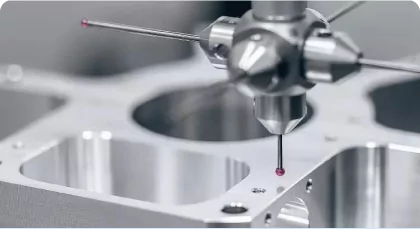
Once the part has been machined, it undergoes quality control to ensure it meets the required specifications. This may include measuring the part, testing its functionality, or inspecting it for defects. After passing quality control, the part may go through finishing processes such as polishing, coating, or assembly before being delivered to the client.