On-Demand Manufacturing Solutions
+8615817600962      info@alpha-mold.com
Current position: Home>Resources>Blogs

Blog

We share insights, industry updates, and expertise in precision manufacturing.

What is nylon? In industrial manufacturing, nylon is a highly durable, synthetic thermoplastic polymer known scientifically as a polyamide plastic. It is globally favored for its exceptional wear resistance and high tensile strength.

While advanced metal additive manufacturing is the ultimate goal, rapid prototyping rarely starts with expensive metal powders. Engineers need a tough, reliable material to undergo rigorous functional testing first.

This is where engineering-grade nylon becomes indispensable. Today, nylon 3D printing has completely revolutionized complex manufacturing, acting as the perfect stepping stone to accurately mimic final metal parts.

The Core Science: Thermoplastic Polymers and Polyamide Plastic

To understand its industrial dominance, we must look directly at its underlying chemistry. Nylon belongs to a versatile category of materials known as thermoplastic polymers.

This classification means the material can be melted into complex shapes and cooled into a solid state without suffering chemical degradation. This reversible melt-and-cool cycle makes it flawless for rapid prototyping.

Specifically, nylon is categorized as a polyamide plastic. This refers to the incredibly strong chemical bonds, called amide links, that hold its molecular chains tightly together.

Unlike standard, brittle desktop resins, these interwoven polyamide chains give the material its legendary toughness. It allows mechanical parts to stretch and absorb sudden impacts rather than instantly shattering under pressure.

Key Nylon Material Properties: Why Engineers Choose It
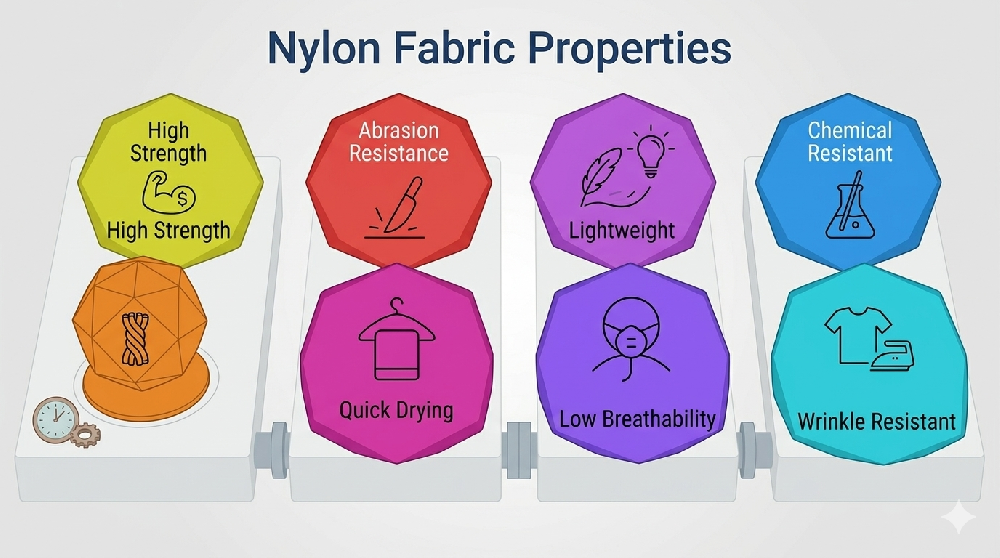
image1.png

When evaluating materials for functional parts, engineers rigorously scrutinize specific nylon material properties. It remains an absolute industry favorite for several critical reasons:

  • Exceptional Tensile Strength: The tensile strength of nylon is remarkably high, allowing it to bear heavy structural loads. This makes it a primary choice for load-bearing brackets and testing components without failing.

  • Superior Wear Resistance: It ranks at the very top among abrasion resistant plastics, naturally resisting friction. Engineers frequently use it to manufacture interlocking gears and sliding mechanisms requiring long-term repetitive movement.

  • Chemical Resilience: Factory floor components printed in this core nylon plastic property easily survive prolonged exposure. They maintain their structural integrity against machine oils, greases, and mild industrial solvents.

  • The Hygroscopic Flaw: You must understand its primary manufacturing weakness. It acts like a microscopic sponge, absorbing moisture directly from humid air, which will boil and ruin the part if not strictly dried before printing.

Types of Nylon in Manufacturing: Nylon 12 vs Nylon 6

Not all polyamides behave identically on the factory floor. When sourcing materials, you will encounter different types of nylon, usually denoted by numbers indicating their specific molecular structure.

The most common industrial debate centers around nylon 12 vs nylon 6, as each serves a very distinct manufacturing purpose:

  • Nylon 6 and Nylon 6/6: These are extremely rigid plastics with incredibly high melting points. They serve as the traditional, heavy-duty backbone for CNC machining and standard block molding.

  • Nylon 12: This variant absorbs significantly less atmospheric moisture, making it highly dimensionally stable. Because it resists warping, nylon 12 3D printing is the absolute gold standard for modern additive manufacturing.

Top Methods for Nylon Rapid Prototyping

SLS Nylon Printing

For complex, support-free geometries, SLS nylon printing is the premier manufacturing choice. A high-powered laser selectively melts microscopic nylon particles layer by layer inside a heated powder bed.

The unfused powder naturally supports the part during the build process, entirely eliminating the need for separate support structures. This allows engineers to design intricate internal channels impossible to machine traditionally.

FDM Nylon Filament

Fused Deposition Modeling offers another accessible route for nylon rapid prototyping. By extruding melted FDM nylon filament through a heated nozzle, engineers can create tough, impact-resistant mechanical components.

However, printing this filament successfully requires a highly controlled, heated build chamber. Without strict thermal management, the material will rapidly shrink and warp off the print bed during the cooling phase.

Injection Molding Nylon

While 3D printing dominates the initial design phase, injection molding nylon takes over for ultimate mass production. Once a custom prototype is perfected, manufacturers transition to molding for cost-efficiency.

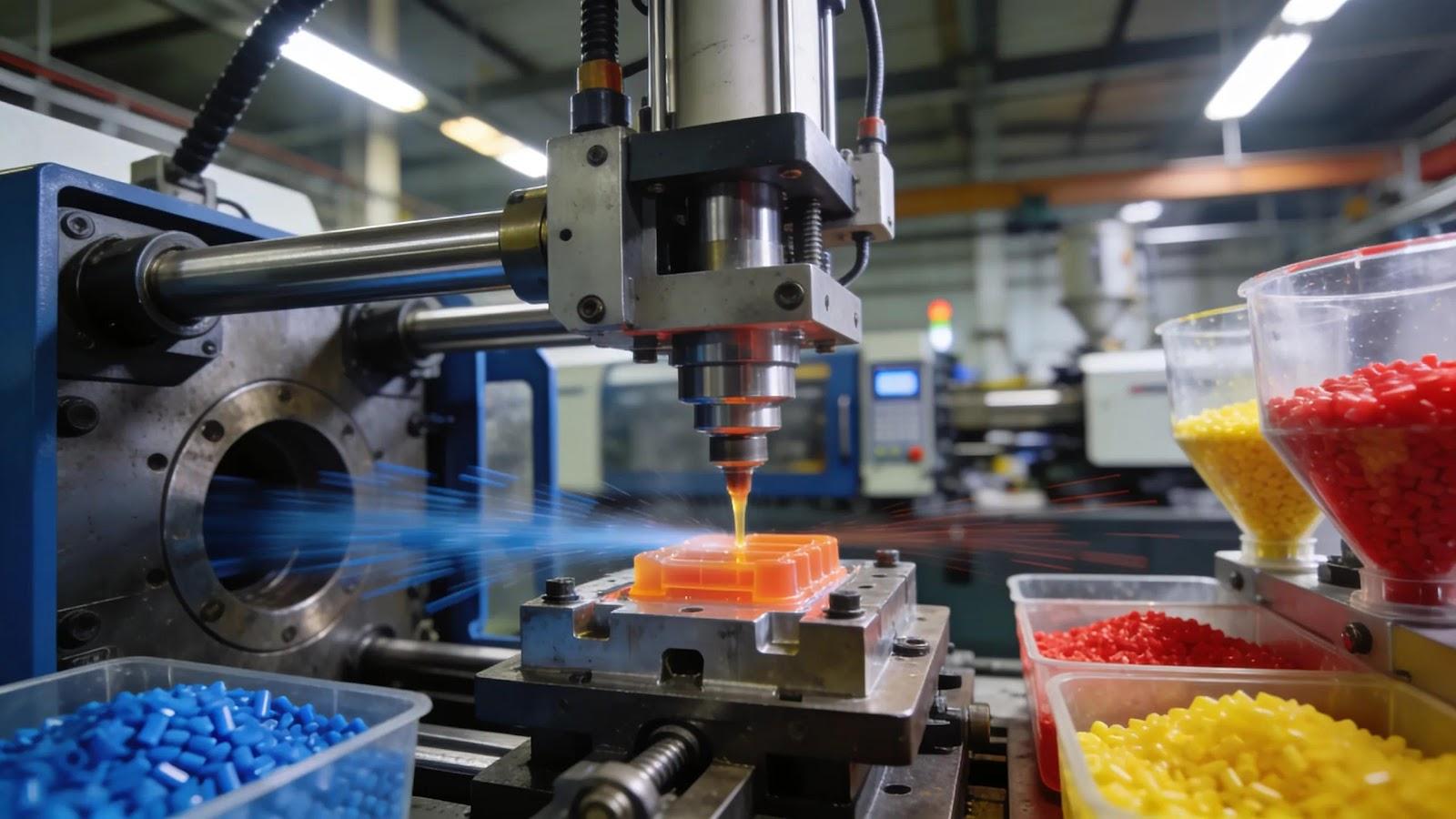
Raw nylon pellets are melted and forced into precision metal cavities under extreme pressure. This method allows for the rapid, high-volume production of tens of thousands of identical mechanical parts.

Material Showdown: Nylon vs ABS 3D Printing

Engineers constantly weigh material options, especially when evaluating nylon vs abs 3d printing. ABS is a fantastic, cost-effective plastic for basic visual models but shatters easily under high impact.

Nylon offers vastly superior layer adhesion and functional flexibility. If a custom nylon part needs to bear heavy weight, bend without breaking, or survive a factory floor drop, nylon wins every single time.

Sourcing Custom Parts and Nylon 3D Printing Services

Setting up industrial SLS machines requires significant capital and strict moisture-controlled environments. Therefore, many engineering teams choose to utilize a professional nylon 3d printing service.

When ordering parts, ensure your manufacturing partner utilizes industrial-grade equipment and strict powder drying protocols. This guarantees your prototypes will match the exact structural integrity required for testing.

Proper post-processing is equally critical when outsourcing. Services like automated vapor smoothing or media blasting are essential to give your functional prototypes a clean, factory-finished look.

Advanced Engineering Insights on Polyamides

To ensure your prototyping phase is successful, keep these advanced operational guidelines in mind when working with this specific polymer family:

  • Water Resistance Limits: A common misconception is that this material is entirely waterproof. Because of its hygroscopic nature, prolonged submersion can alter its dimensions and weaken its structural integrity over time.

  • Post-Print Machining: While additive manufacturing is highly popular, machining is entirely possible and often recommended. Solid blocks of Nylon 6 are routinely milled to achieve incredibly tight tolerances for aerospace applications.

  • The Ultimate Bridge: Mastering this material bridges the gap between digital design and final metal production. It remains the most reliable tool for engineers validating complex geometries before committing to expensive manufacturing runs.

Frequently Asked Questions 

Is nylon stronger than ABS for 3D printing? Yes, nylon is significantly stronger and more durable than standard ABS. While ABS is rigid and prone to shattering under high impact, nylon possesses superior tensile strength and flexibility. This allows printed parts to absorb heavy mechanical stress without breaking.

Is nylon plastic waterproof? No, standard nylon is not waterproof because it is highly hygroscopic. It acts like a microscopic sponge, continuously absorbing moisture from the surrounding air. Prolonged underwater submersion will ultimately alter its dimensional accuracy and weaken its structural integrity.

Can you CNC machine solid nylon? Yes, you can easily machine solid blocks of this material. Nylon 6 and Nylon 6/6 are the preferred polyamide variants for CNC machining due to their extreme rigidity. This traditional method is frequently used to achieve incredibly tight tolerances for aerospace components.

What is the melting point of nylon in manufacturing? The exact melting point depends entirely on the specific type of polyamide being used. Nylon 12 typically melts around 178°C to 180°C, making it ideal for SLS printing powder beds. Conversely, rigid Nylon 6 melts at a much higher temperature, usually around 220°C.

Why do you need to dry nylon before 3D printing? You must dry the material to prevent trapped water from ruining the print. Because it absorbs atmospheric humidity, printing wet filament or powder causes the water to boil instantly. This creates steam bubbles, poor layer adhesion, and severely weakened mechanical parts.

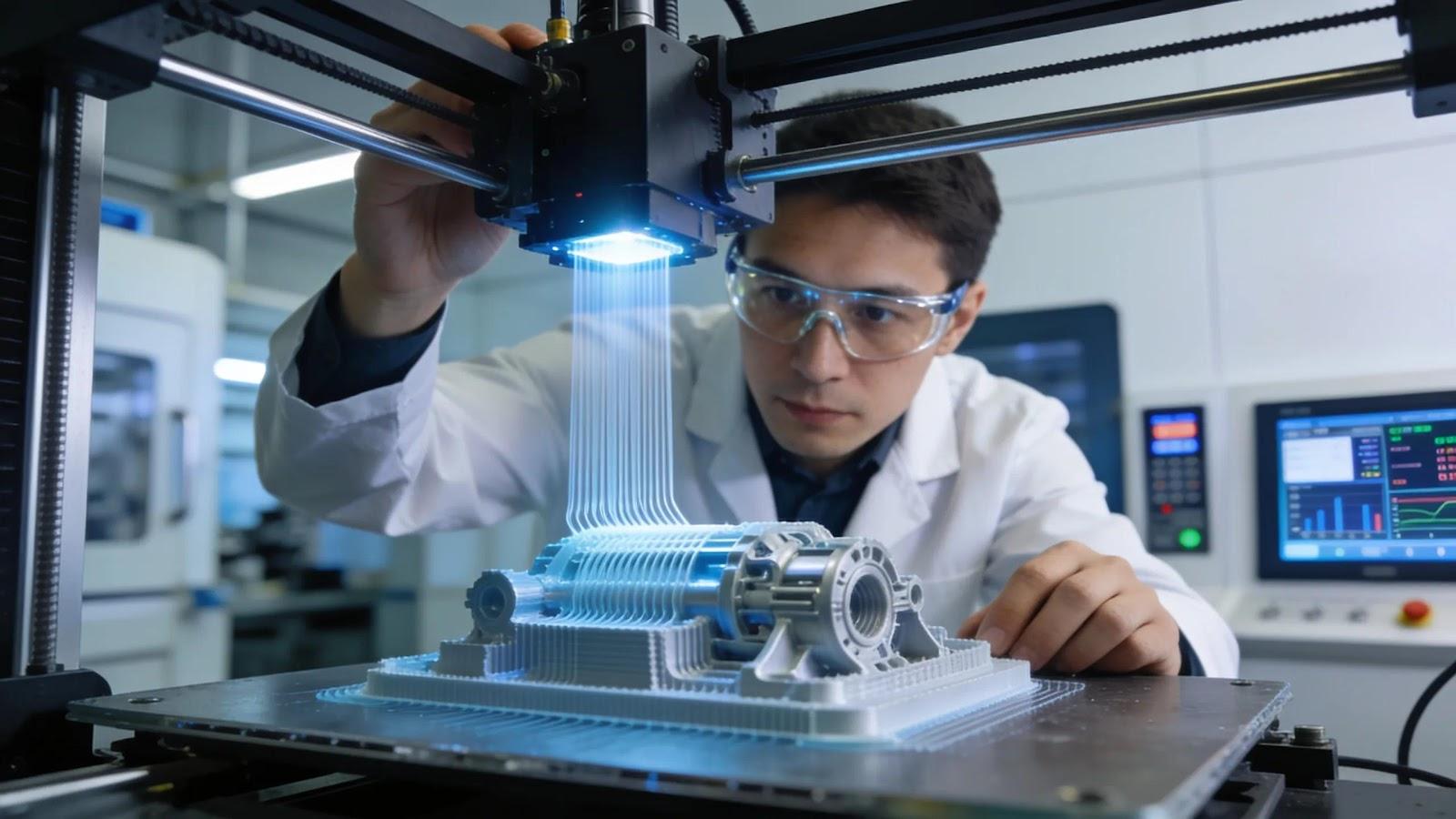
In hardware engineering, rapid prototyping is the fast fabrication of a physical part, model, or assembly using 3D computer-aided design (CAD) data. It allows product designers to transform digital concepts into tangible reality in a matter of days.

Unlike software UI development, the true rapid prototyping meaning in manufacturing strictly involves complex physical part fabrication. It bridges the critical gap between a 3D model on a computer screen and a functional, testable mechanical component.

To navigate this hardware development cycle successfully, engineers need more than just a basic desktop 3D printer. True iterative design requires an industrial-grade approach that tests actual end-use materials and tight tolerances.

This is where Alpha-Mold steps in as your turnkey manufacturing partner. We provide expert CAD prototyping and engineering support, seamlessly guiding your project from a single visual concept directly into mass production.

Why is Rapid Prototyping Important in Engineering?

In today's hyper-competitive hardware market, speed is just as critical as precision. Implementing prototyping in engineering is no longer a luxury; it is a fundamental requirement for commercial success.

Instead of guessing if a CAD file will translate well into the real world, designers can instantly hold a physical model in their hands. This immediate, tactile validation unlocks several critical advantages of rapid prototyping:

  • Accelerated Time-to-Market: By rapidly iterating through design cycles, you can finalize and launch products months ahead of competitors who rely on traditional, slow-moving fabrication methods.

  • Cost-Saving Risk Mitigation: Identifying a geometric flaw on a computer screen is difficult; finding it on a physical Proof of Concept (PoC) is instant. This saves thousands of dollars by catching errors before cutting expensive steel injection molds.

  • Streamlined Design for Manufacturability (DFM): Testing physical parts allows engineers to refine designs for assembly line efficiency, ensuring the final product is actually scalable.

  • Faster Stakeholder Approval: Securing investor funding or executive sign-off is significantly easier when you can hand them a highly accurate, functional model rather than a 2D rendering.

Many companies mistakenly assume they must buy expensive, in-house 3D printers to unlock these benefits of rapid prototyping. However, purchasing desktop machines limits you to basic plastics and introduces steep maintenance costs.

Partnering with a dedicated, high-tech manufacturing facility like Alpha-Mold completely eliminates this capital expenditure. You gain immediate access to industrial-grade testing, diverse end-use materials, and expert engineering guidance without the overhead.

The 4 Stages of Prototyping (From Concept to Production)

image2.png

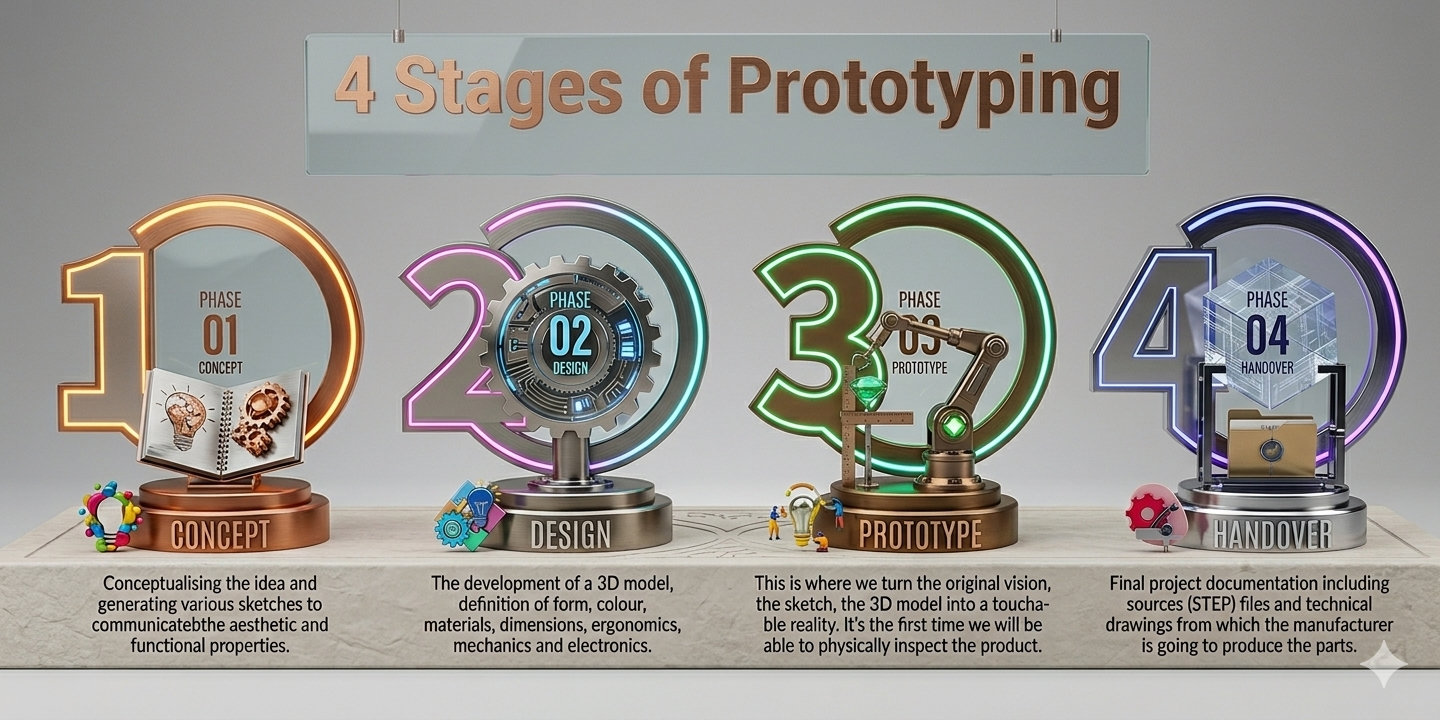
Understanding the stages of prototyping is essential for a smooth transition from a digital CAD file to a mass-produced commercial product. Each phase serves a distinct purpose, utilizing different manufacturing technologies and material strengths.

To master the hardware development process, engineers generally divide physical prototyping into four sequential categories:

  1. Concept Models (Proof of Concept): This initial phase relies on fast, inexpensive additive manufacturing to test basic shapes and spatial relationships. It is strictly about answering the question: "Does this geometric idea make sense in the real world?"

  2. Looks-Like Prototypes (Visual Validation): These models focus entirely on aesthetics, user experience, and ergonomics. They often utilize custom painting or polishing to show stakeholders exactly how the final product will appear on a shelf.

  3. Works-Like Prototypes (Functional Testing): This is where rigorous mechanical prototyping begins. These parts require real end-use metals or strong plastics to verify structural integrity, assembly fit, and performance under actual mechanical stress.

  4. Pre-Production Models (Engineering validation testing - EVT): The final stage utilizes rapid tooling to create small batches using the exact mass-production manufacturing process. This stage ensures the product is flawlessly optimized before investing in expensive steel molds.

While early concept stages often rely on basic 3D printed plastics, advancing to functional and pre-production models demands industrial-grade machinery.

Partnering with a turnkey manufacturer like Alpha-Mold ensures you don't hit a wall midway; we provide the exact technology required for every single stage of your journey.

Top Rapid Prototyping Technologies & Methods

Choosing the right rapid prototyping method dictates the speed and success of your hardware cycle. By understanding the common types of rapid prototyping, engineers avoid costly missteps. Here are the leading rapid prototyping techniques used today.

3D Printing (Additive Manufacturing)

When asking "what is rapid prototyping in 3d printing?", engineers refer to additive processes building parts layer-by-layer. Technologies like SLA, SLS, and FDM are industry standards.

A 3d printing prototype is unbeatable for speed and forming complex geometries. It is perfect for early concept models, but often lacks the strength needed for rigorous mechanical testing.

5-Axis CNC Machining (Subtractive Manufacturing)

For true structural integrity, rapid prototyping in metal is absolutely mandatory. Desktop 3D printers cannot replicate the mechanical stress handling of Aluminum 6061 or steel.

This makes cnc rapid prototyping the most critical step for functional validation. Using 5-Axis CNC Machining, Alpha-Mold achieves Tight Tolerances (ISO 2768) that printing cannot match.

Explore our CNC Machining Services  to secure precision for your most demanding aerospace or medical parts.

Vacuum Casting (Urethane Casting)

Often ignored by automated platforms, a vacuum casting prototype is the ultimate secret for cost-effective, low-volume production.

We use a 3D-printed master pattern to create silicone molds, then pour liquid polyurethane under a vacuum.

This quick prototyping method yields 20-50 high-quality plastic parts. It perfectly mimics injection molding, making it the smartest choice for investor samples.

Rapid Tooling & Injection Molding

Before investing heavily in mass production, rapid tooling injection molding validates your actual manufacturing process.

By using softer aluminum molds or bridge tooling, we run small batches with real end-use thermoplastics.

This crucial step ensures your design is fully scalable. It acts as an insurance policy, guaranteeing flawless mass manufacturing without expensive tooling modifications later.

How to Choose the Right Prototyping Procedure

Selecting the correct rapid prototyping procedure does not have to be a complicated guessing game. Hardware engineers must balance their need for speed, budget constraints, and structural material requirements.

To help you instantly evaluate the best prototyping technologies for your specific project phase, use our quick-reference decision matrix below.

Prototyping Method

Best Used For

Speed

Relative Cost

Primary Materials

3D Printing (SLA/SLS)

Early concept models & complex internal geometries

Very Fast

Low

Thermoplastics & Resins

5-Axis CNC Machining

Works-like functional testing & high precision

Medium

High

Aluminum 6061, Steel, PEEK

Vacuum Casting

20-50 high-quality visual or pilot run parts

Medium

Medium

Polyurethane (Mimics Injection)

Rapid Tooling

Pre-production validation before mass manufacturing

Slow

High

End-use injection plastics

Why Human-Led DFM Beats Automated Prototyping

Many modern digital manufacturers force you to upload your cad prototyping files into a rigid automated quoting algorithm. Unfortunately, these software systems frequently reject complex geometries or advise you to drop critical surface finishes to save time.

At Alpha-Mold, we know that true Consultative DFM (Design for Manufacturability) requires a human touch. Our senior engineers manually review your files to solve geometric challenges that automated robots simply flag as "impossible."

Furthermore, we never sacrifice aesthetics for speed. Whether you require precise SPI finishes for molded plastics or custom Anodizing for metal components, we deliver flawless visual models.

By avoiding automated quoting limitations, our rapid prototyping services China facility delivers highly customized, investor-ready components at prices 25-45% lower than Western suppliers.

Transitioning from Prototype to Mass Production

The ultimate goal of any hardware cycle is to successfully launch a commercial product. You do not need to invest capital into buying a rapid prototyping machine to achieve this.

Partnering with a Turnkey manufacturing provider ensures your project never stalls when it is time to scale up. Alpha-Mold seamlessly guides your product from a single desktop model directly into full-scale mass production.

By keeping prototyping and final production under one roof, we eliminate the friction of supply chain scaling. We act as your dedicated long-term partner, accelerating your time-to-market without ever compromising on ISO-certified quality.

Ready to Bring Your Design to Life?

Do not let automated software rejections or a lack of in-house machinery slow down your product launch. Alpha-Mold is ready to turn your digital files into physical reality.

Upload your 2D drawings or 3D CAD models today for a free, human-led engineering review. Our experts will evaluate your design and provide a competitive, highly accurate quote within 24 hours.


image3.jpg


Bringing a new product to market requires a disciplined, stage-gated approach that guides teams from concept through launch. Each phase plays a specific role in validating customer needs and aligning the result with business objectives. This guide breaks down the seven practical stages of product development — covering market research, design, prototyping, testing, and the steps to scale into manufacturing and launch. Working with a precision partner like Alpha-Mold Company Limited, which specializes in high-precision moldmaking and prototyping, can be decisive at several points in the process. Below we outline each stage, common challenges you’ll face, and practical ways to address them.

What Are the Key Stages in the Product Development Process?


The product development process is composed of discrete stages, each focused on refining the concept and reducing risk before committing to volume production. The key stages are:

  • Idea Generation: Systematic brainstorming and collection of potential product concepts.

  • Market Research: Gathering data to validate demand and define target customer segments.

  • Concept Development and Testing: Converting ideas into testable concepts and validating feasibility.

  • Product Development: Engineering and designing prototypes that prove function and manufacturability.

  • Market Testing: Running controlled user tests to collect feedback and performance data.

  • Commercialization: Finalizing production-ready designs and preparing marketing and supply chains.

  • Launch: Deploying the product to market and monitoring early performance metrics.


Each stage has clear goals and deliverables that steer teams toward a successful market entry. A strong grasp of these product development stages helps product managers, engineers, and stakeholders coordinate decisions and timelines.

How Does Market Research Inform Product Development?


Market research anchors product decisions in evidence. By analyzing customer needs, market trends, and competitor offerings, teams can prioritize features, set realistic price points, and identify target segments. Research validates the product hypothesis and reduces the risk of costly pivots later. Alpha-Mold Company Limited emphasizes using market insights early to shape prototype requirements and tooling constraints so the design aligns with real-world expectations.

What Role Does Product Design Play in Development?


Product design translates requirements into form, function, and manufacturability. Good design balances user experience, cost, and production realities so products are desirable and repeatable at scale. Early collaboration with manufacturing partners — for example, Alpha-Mold on prototype tooling — uncovers production constraints and can reduce redesign cycles, lower costs, and accelerate time-to-market.

How Is Prototype Creation Performed in Product Development?


Prototyping proves concepts before committing to full-scale production. The type of prototype depends on complexity, required fidelity, and test objectives — from quick-fit models for form and ergonomics to engineered prototypes that validate function and assembly.

What Are Common Prototype Creation Methods and Technologies?

image2.jpg


Typical methods include 3D printing for fast iteration and low-volume concept testing, CNC machining for precise, functional components, and injection molding for representative, production-like parts at higher volumes. Handcrafted mock-ups are useful in early design reviews. Each method has trade-offs: 3D printing offers speed and flexibility, CNC delivers accuracy, and injection molding provides the closest representation of final production parts.


Choose the method that matches your validation goals — for rapid iterations, 3D printing often offers the best balance of speed and cost.

Why Is Precision Tooling Important for Prototype Development?


Precision tooling preserves design intent and functional tolerances across iterations. High-quality molds and tools ensure prototypes reflect true fit, performance, and assembly behavior — which prevents surprises during scale-up. Leveraging advanced mold technology from specialists like Alpha-Mold Company Limited improves dimensional accuracy and shortens the path from prototype to production-ready tooling. Ignoring tooling precision can generate rework, delay schedules, and increase costs downstream.

What Are Best Practices for Product Testing Before Launch?

image4.jpg

Robust product testing identifies weaknesses and confirms that the design meets user needs. Best practices include structured user testing to observe real interactions, A/B testing to compare alternative solutions, and market surveys to measure broader acceptance. These methods validate assumptions, prioritize fixes, and inform launch readiness.


Companies such as Alpha-Mold use systematic validation to ensure prototypes meet functional and quality expectations before moving to higher-volume production.

How Do Different Product Testing Methods Validate Prototypes?


Different test formats reveal distinct kinds of insight. Usability testing shows how users interact with the product in context. Focus groups capture qualitative reactions and positioning clues. Beta tests expose products to limited real-world use, surfacing reliability issues and feature gaps. Combining methods gives a clearer, multidimensional view of readiness.

How Does Product Testing Influence Manufacturing Decisions?


Testing outcomes drive choices about materials, tolerances, and production techniques. Feedback can require design tweaks, influence supplier selection, and determine quality control thresholds. By integrating test results into manufacturing planning, teams reduce risk and optimize cost, performance, and yield when scaling to volume production.

How to Transition from Prototype to Manufacturing and Launch?


Moving from prototype to production demands detailed planning across engineering, supply chain, and commercial teams. Key activities include assessing scalability, confirming that the design can be manufactured efficiently, coordinating suppliers to meet specifications, and preparing launch marketing. Clear handoffs, documented requirements, and early supplier engagement reduce surprises during ramp-up.


Established manufacturing services — including precision molding, assembly, and QA testing — help ensure a clean transition from development to high-volume production.

What Manufacturing Services Support Efficient Product Fabrication?


A core set of services supports reliable fabrication:

  • Precision Molding: Produces consistent, dimensionally accurate parts suitable for volume runs.

  • Assembly Services: Streamlines component integration and final product build.

  • Quality Assurance Testing: Confirms parts and assemblies meet specifications and safety standards.


Alpha-Mold Company Limited provides these capabilities, enabling smoother scale-up, shorter time-to-market, and controlled quality across production cycles.

How Is Post-Launch Evaluation Conducted for Continuous Improvement?


Post-launch evaluation measures real-market performance and identifies improvement opportunities. Typical activities include sales analysis, monitoring customer feedback channels, and tracking performance metrics against initial targets. Those insights feed product updates, service improvements, and roadmap decisions — creating a continuous improvement loop that sustains product relevance.

Frequently Asked Questions

What are the typical challenges faced during the product development process?


Common challenges include unclear market requirements, budget and schedule pressure, and cross-functional misalignment. Technical issues during prototyping or production can also disrupt timelines. Mitigation strategies include maintaining clear communication protocols, iterative validation checkpoints, and early stakeholder involvement to minimize rework and keep the program on track.

How do companies determine the right target audience for their products?


Identifying the right audience starts with structured market research: demographic and psychographic analysis, user interviews, competitor benchmarking, and behavioral data. Creating customer personas and testing concepts with representative users helps refine positioning and channel strategy. Analytics from early campaigns further sharpen audience targeting.

What factors influence the decision to move forward after the prototype testing phase?


Decisions to proceed hinge on user feedback, technical performance against acceptance criteria, market demand indicators, and financial viability. Teams weigh necessary design changes, production costs, and projected margins before committing to tooling and full-scale production.

How should companies prepare for a product launch?


Launch preparation combines go-to-market planning with supply readiness: finalize pricing and messaging, align distribution and inventory, confirm quality gates, and prepare customer support channels. Pre-launch testing and pilot runs reduce risk, while targeted marketing and channel coordination ensure initial demand can be fulfilled.

What role does feedback collection play after product launch?


Post-launch feedback is essential for assessing fit and driving iteration. Collecting reviews, survey responses, and support data highlights strengths and issues that inform updates, warranty actions, and roadmap priorities. A structured feedback loop helps maintain product quality and customer satisfaction over time.

How can companies ensure product quality during the manufacturing process?


Quality during manufacturing is assured through defined inspection plans, in-process testing, supplier audits, and final acceptance criteria. Investing in skilled operators, proper tooling, and robust QA procedures reduces defects. Incorporating lessons from prototyping and pilot production into the manufacturing plan preserves design intent at scale.

Conclusion


Understanding the seven stages of product development helps teams manage complexity and reduce risk from concept to market. By combining solid market insights, disciplined design, and rigorous testing — and by partnering with experienced manufacturers like Alpha-Mold — companies can shorten timelines, control costs, and deliver products that meet customer expectations. Explore how Alpha-Mold’s precision and prototyping expertise can support your next project and accelerate your path to production.


image3.jpg

Fiberglass is a composite valued for both its physical performance and its distinct visual character. To read fiberglass visually, you look at its texture, color, and surface finish — all of which are shaped by fiber selection, resin choice, and manufacturing technique. This guide explains the core visual traits of fiberglass, shows how production methods change its appearance, and answers common questions about identifying and working with fiberglass products. It also outlines the main fiberglass types and practical tips for handling finished parts.

What Are the Key Visual Features of Fiberglass?


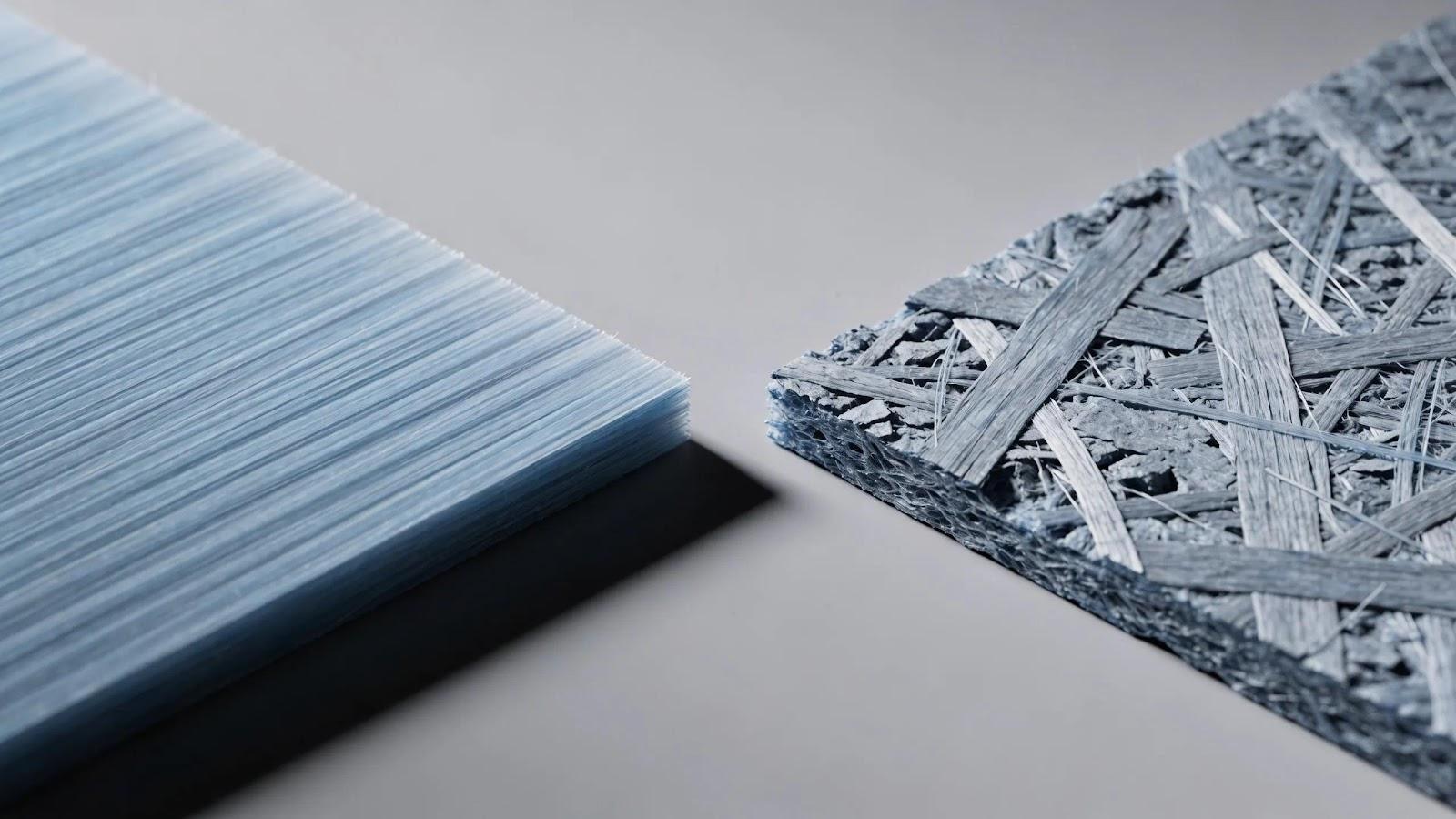
The look of fiberglass comes from the interaction of its glass fibers and the resin matrix that binds them. Surface texture can be anything from glass-smooth to subtly coarse depending on layup and tooling. Fiberglass surfaces are often translucent or opaque, and color shifts usually stem from the resin and any added pigments. Together, these factors determine whether a part reads as functional, decorative, or structural in a given application.

How Does Fiber Orientation Affect Fiberglass Texture?

image2.jpg


Fiber orientation has a direct effect on surface feel and appearance. Randomly oriented fibers tend to produce a consistent, uniform texture well suited to bulk or structural parts. When fibers are aligned, you can achieve smoother, directional surfaces that both look cleaner and improve mechanical performance. In consumer-facing applications such as automotive body panels, fiber orientation is used deliberately to produce a refined, attractive finish.

What Role Does the Resin Matrix Play in Fiberglass Appearance?

image4.jpg


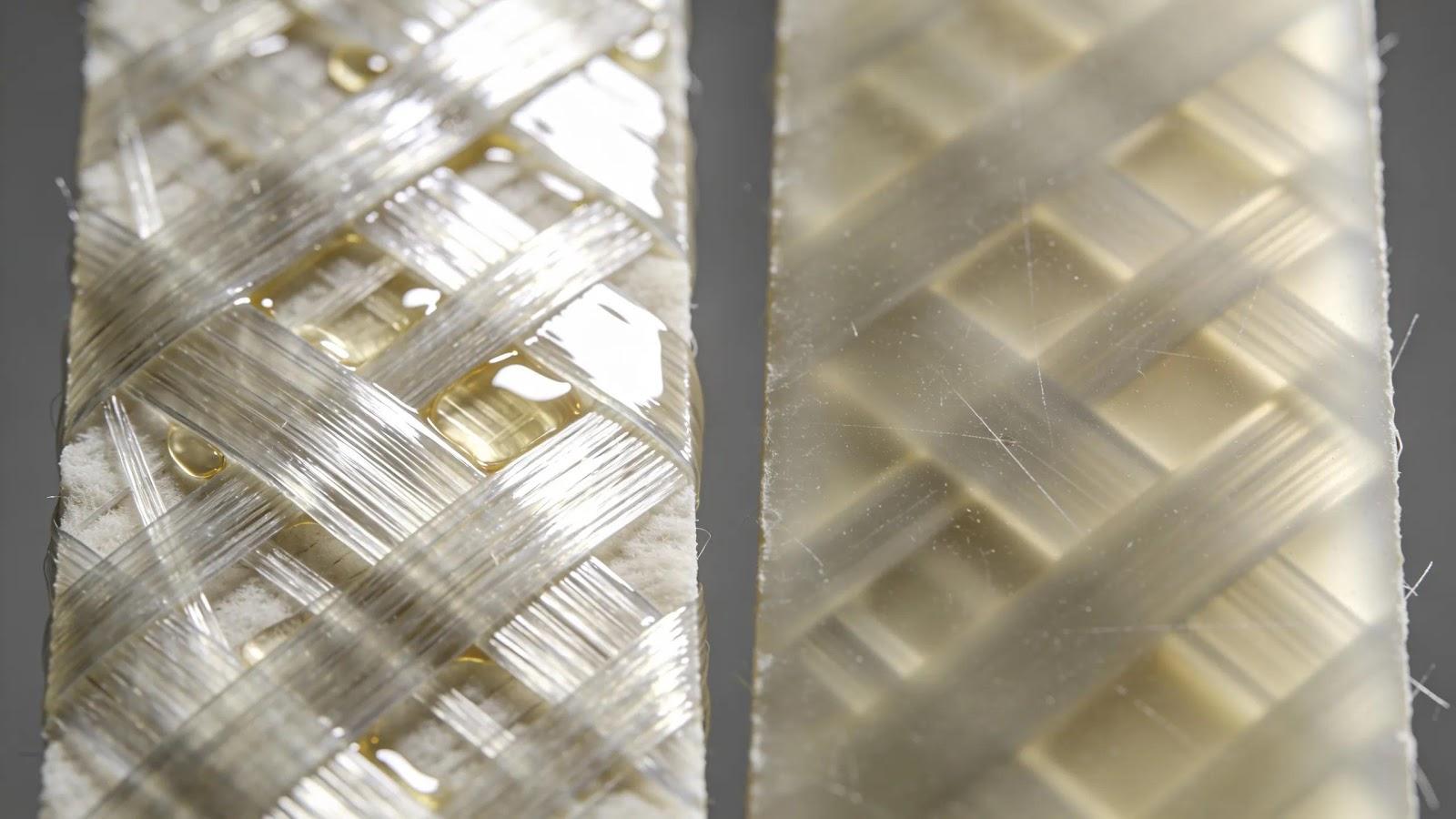
The resin matrix controls gloss, clarity, and weather resistance. Epoxy systems typically yield higher gloss and superior UV stability compared with polyester resins, which can be more economical but less glossy. Choosing the right resin affects both durability and visual impact, whether the part will be exposed outdoors, painted, or left as a visible finish.

Which Fiberglass Types and Materials Influence Its Look?


Appearance varies with fiber type, resin selection, and the component's intended use. These variables dictate visual outcomes and performance trade-offs, which is why different industries — from construction to marine and automotive — select specific combinations to meet both aesthetic and functional goals.

What Are the Different Fiberglass Fiber Types Used in Manufacturing?


Common fiber types include E-glass, S-glass, and specialty high‑temperature fibers. E-glass is widely used for its balance of cost and electrical insulation, producing lighter-cost-effective parts. S-glass offers higher strength and better thermal performance, often chosen where structural demands and long-term dimensional stability are priorities. Each fiber brings subtle differences in texture and visual character to the finished laminate.

How Does Composite Material Selection Impact Fiberglass Appearance?


Material choices — resin, fiber weave, and additives — determine how light interacts with the surface. Pigments and fillers change color and opacity; differing fiber-resin ratios influence sheen and translucency. Manufacturers balance these elements to hit the desired look: glossy and vivid for visible consumer products, or matte and uniform for functional components.


Alpha-Mold Company Limited is a precision manufacturing partner specializing in mold making and composite component production. Our capabilities include fiberglass mold manufacturing, resin transfer molding (RTM), and composite tooling, enabling tailored surface and structural solutions for a range of industries.

How Does Fiberglass Manufacturing Affect Its Surface Look?


Production methods are decisive for surface quality. Processes like tooling accuracy, resin infusion, and curing control whether a part comes out glossy, textured, or blemished. Advanced techniques improve resin distribution and reduce surface defects, giving manufacturers reliable control over the final appearance.

What Is Resin Transfer Molding and How Does It Influence Fiberglass Textures?


Resin transfer molding (RTM) injects resin into dry fiber preforms inside a closed mold, producing consistent resin coverage and high-quality surface finishes. RTM minimizes surface imperfections and enhances color clarity compared with open methods, which is why it’s preferred for applications where visual quality is important, such as automotive and consumer parts.

What Surface Finishing Options Alter Fiberglass Gloss and Texture?


Finishing techniques let you tune gloss and feel. Common options include gel coats for a hard, glossy protective layer; sanding to refine texture and produce a smooth, matte surface; and waxing to boost surface brightness and provide short-term protection. Selecting the right finish depends on the expected service conditions and the desired visual result.


Applied finishing methods can significantly change the appearance and durability of fiberglass parts, allowing designers and manufacturers to meet both aesthetic and performance requirements.


Finish Type

Technique

Visual Effect

Durability

Gel Coating

Applied coating

High gloss, UV resistant

Moderate

Sanding

Abrasive technique

Smoother surface, matte look

High

Waxing

Protective coating

Improved brightness

Moderate


These finishing approaches demonstrate how surface treatment tailors fiberglass to specific visual and operational needs.

What Are Common Questions About Fiberglass Appearance?


Prospective users often ask practical questions about identifying and preserving fiberglass finishes. Clear answers help you choose the right processes and maintenance for the intended application.

How Can You Identify Fiberglass by Its Look and Feel?


Look for a characteristic woven or layered fiber pattern, a smooth-to-slightly-coarse tactile feel, and a degree of translucency in thinner sections. Light passing through a laminate may reveal the layered structure beneath. These cues help distinguish fiberglass from similar plastics or painted surfaces.

What Causes Variations in Fiberglass Appearance Across Different Products?


Differences in resin quality, fiber type, layup technique, and finishing account for most visual variation. Lower-grade resins or inconsistent processing can produce dull or uneven surfaces, while premium materials and controlled manufacturing yield brighter, glossier parts. Environmental conditions during curing also affect final appearance.

Frequently Asked Questions

Can fiberglass be painted, and if so, what is the best method?


Yes. Clean the surface thoroughly, apply a primer formulated for fiberglass, then finish with a quality acrylic or urethane topcoat. Choose UV-stable paints for outdoor use to reduce fading.

How does temperature affect the appearance of fiberglass?


Curing temperature has a direct effect: too cold and the resin can undercure, leaving a dull, soft surface; too hot and the resin may flash cure, causing bubbles or uneven texture. Stable, recommended curing conditions produce the most consistent finish.

Is fiberglass recyclable, and how does recycling affect its appearance?


Fiberglass recycling is possible but complex. Reprocessed material may have altered fiber length, color, or surface quality, which can limit its use in high-visibility products. Recycled fiberglass is often redirected to structural or less cosmetically demanding applications.

What finishes are available for fiberglass, and how do they impact aesthetics?


Common finishes include gel coats, paints, and varnishes. Gel coats give a hard, glossy, UV-resistant surface; paints offer color flexibility; varnishes add warmth and sheen. Each finish changes light reflectivity and texture, so choose based on exposure and desired look.

What maintenance is required to preserve the appearance of fiberglass?


Regular cleaning with mild detergent and a soft sponge prevents buildup. Use UV protectants on outdoor parts, and repair minor scratches with fine sandpaper and polish. Consistent maintenance extends both appearance and service life.

How do environmental factors influence the appearance of fiberglass over time?


UV exposure, moisture, and temperature swings can cause fading, chalking, or resin degradation. Protective coatings and routine maintenance mitigate these effects and help preserve surface quality.


Conclusion


Understanding the aesthetics of fiberglass empowers users to make informed choices that align with both visual appeal and functional performance. By considering factors such as fiber orientation, resin selection, and surface finishing techniques, you can achieve the desired look and durability of your fiberglass products. For tailored solutions that meet your unique needs, connect with our expert team today. Discover the possibilities of fiberglass through our comprehensive resources and get started on your next project.


image3.jpg

Metalloids occupy a middle ground between metals and non-metals, giving them a mix of physical and chemical characteristics that are valuable across industrial applications. This article outlines the main properties of metalloids and explains the physical and chemical traits that determine their role in manufacturing processes. You’ll see how elements such as silicon and arsenic are used in semiconductor technology and other sectors of the electronics industry. By understanding these properties, materials scientists and product engineers can make informed choices about practical applications and select the right metalloid for the job.

What Are the Key Physical Properties of Metalloids?


Metalloids show a set of distinct physical properties that place them between metals and non-metals. These include intermediate conductivity levels, varied densities, and characteristic crystal structures. Together, these traits explain their widespread use in electronics and materials science. Their semiconducting abilities enable controlled conduction—vital for circuitry and other electronic components. The following section examines how density and crystal structure influence metalloid classification and performance.

How Do Density and Crystal Structure Define Metalloids?


The density and crystal structure of a metalloid strongly affect where it’s used. Elements such as boron and germanium differ in atomic arrangement, which changes their density and mechanical behavior. Likewise, a metalloid’s crystalline form has a direct impact on its electrical properties and suitability for specific industrial roles.


Metalloid Element

Density (g/cm³)

Crystal Structure

Boron

2.46

Rhombohedral

Silicon

2.33

Diamond cubic

Germanium

5.32

Diamond cubic


Recognizing these physical properties is important because they correlate with performance in processes where thermal and electrical conductivity are critical design factors.

What Types of Conductivity Do Metalloids Exhibit?

image2.jpg


Metalloids are defined by their semiconducting properties, combining both electrical and thermal conductivity behaviors. Silicon, for example, conducts electricity under controlled conditions but can act as an insulator otherwise—making it foundational for modern electronics.

  • Electrical Conductivity: Metalloids generally conduct electricity better than non-metals but not as well as true metals. Silicon can be doped to enhance its conductivity, a process central to producing integrated circuits.

  • Thermal Conductivity: Metalloids display a range of thermal conductivity values. Materials like silicon and germanium conduct heat efficiently—an important property for managing temperatures in electronic components.


This dual conductive behavior makes metalloids effective intermediaries between metals and non-metals in many technology applications.

Which Chemical Behaviors and Bonding Characteristics Are Typical of Metalloids?


Chemically, metalloids can act with both metallic and non-metallic characteristics. These mixed behaviors determine their bonding capabilities and reactivity, which in turn shape their industrial uses—especially in alloy formation and the synthesis of functional compounds.

How Do Metalloids React Chemically Compared to Metals and Nonmetals?


Metalloids display variable reactivity that places them between metals and non-metals. For example, silicon commonly forms covalent bonds with non-metals, producing compounds such as silicates, while arsenic can behave more like a metal when reacting with acids or bases. These differences guide how each element is used in industrial chemistry and materials synthesis.

  • Silicon: Reacts with halogens to form silicon halides.

  • Arsenic: Forms arsenides with metals, showing more metallic character in such reactions.


Understanding these reaction patterns is essential when applying metalloids in manufacturing and chemical processes.

What Are Common Bonding Types Formed by Metalloids?


Metalloids commonly form both covalent and metallic bonds, which affects how they behave in chemical compounds. For example:

  • Covalent Bonds: Frequently formed with non-metals; silicon creates strong covalent links with oxygen in silicates.

  • Metallic Bonds: Seen when certain metalloids, like arsenic, bond with metals—relevant for designing specific alloys.


These bonding modes explain much of the versatility of metalloids in materials science and manufacturing.

How Are Metalloids Used in Semiconductor and Electronics Manufacturing?

image4.jpg


Metalloids are central to semiconductor manufacture and the production of electronic components because of their tunable electrical properties. Across the technology sector, these elements enable reliable, high-performance electronic devices.

Why Are Silicon and Arsenic Crucial Metalloid Materials for Semiconductors?


Silicon is the backbone of semiconductor technology, enabling the formation of p-n junctions used in transistors and diodes. Arsenic is commonly used as a dopant to produce n-type semiconductors, improving the conductivity and performance of silicon-based components.

  • Silicon's Role: Integral to the fabrication of integrated circuits and solar cells.

  • Arsenic's Contribution: Acts as a dopant to refine the electrical properties of silicon materials for better device performance.

What Manufacturing Capabilities Leverage Metalloid Properties Effectively?


Manufacturers exploit metalloid properties to develop advanced materials and components. Companies such as Alpha-Mold Company Limited provide manufacturing services that intersect with metalloid-based materials—ranging from semiconductor-grade substrates to specialized metal alloys. These services help customers improve product efficiency, reliability, and manufacturability.

What Is the Classification of Metalloids and Their Typical Industrial Examples?


The accepted classification of metalloids helps clarify their properties and industrial uses. Knowing which elements are treated as metalloids supports better material selection and application planning.

Which Elements Are Classified as Metalloids?


Common elements classified as metalloids include:

  • Silicon (Si)

  • Germanium (Ge)

  • Arsenic (As)

  • Boron (B)


Each element offers distinct traits that determine suitability across industries from electronics to metallurgy.

How Do These Classifications Relate to Their Functional Uses?


The classification of metalloids maps directly to their industrial roles. Silicon, for example, is favored in semiconductor manufacturing due to its electrical behavior, while boron contributes hardness and thermal stability in glass and ceramic applications.


This classification framework helps engineers and materials scientists select the right metalloid for specific manufacturing processes.

Conclusion


Metalloids combine distinctive physical and chemical traits that make them indispensable across modern industry—especially in semiconductors and electronics. Understanding properties like conductivity, crystal structure, and bonding behavior helps teams choose materials that improve performance and manufacturability. For a deeper dive into specific metalloids and their industrial uses, explore our technical resources and material selection guides. Choose the right metalloid to optimize your project outcomes.


Choosing the correct material for injection molding determines how well a part performs, how long it lasts, and how efficiently it’s produced. This guide breaks down the common material families, key properties, and practical trade-offs so engineers and product teams can select the best plastics for their application—whether in automotive, medical, or consumer products.

image3.jpg

In manufacturing, material selection is more than a specification—it's a decision that shapes performance and manufacturability. Understanding thermoplastics, thermosets, and composites—and how their mechanical, thermal, and chemical properties interact with your process—lets you make choices that meet functional requirements and production constraints. This article guides you through those considerations and highlights what matters most for reliable parts.

What Are the Main Types of Injection Molding Materials?


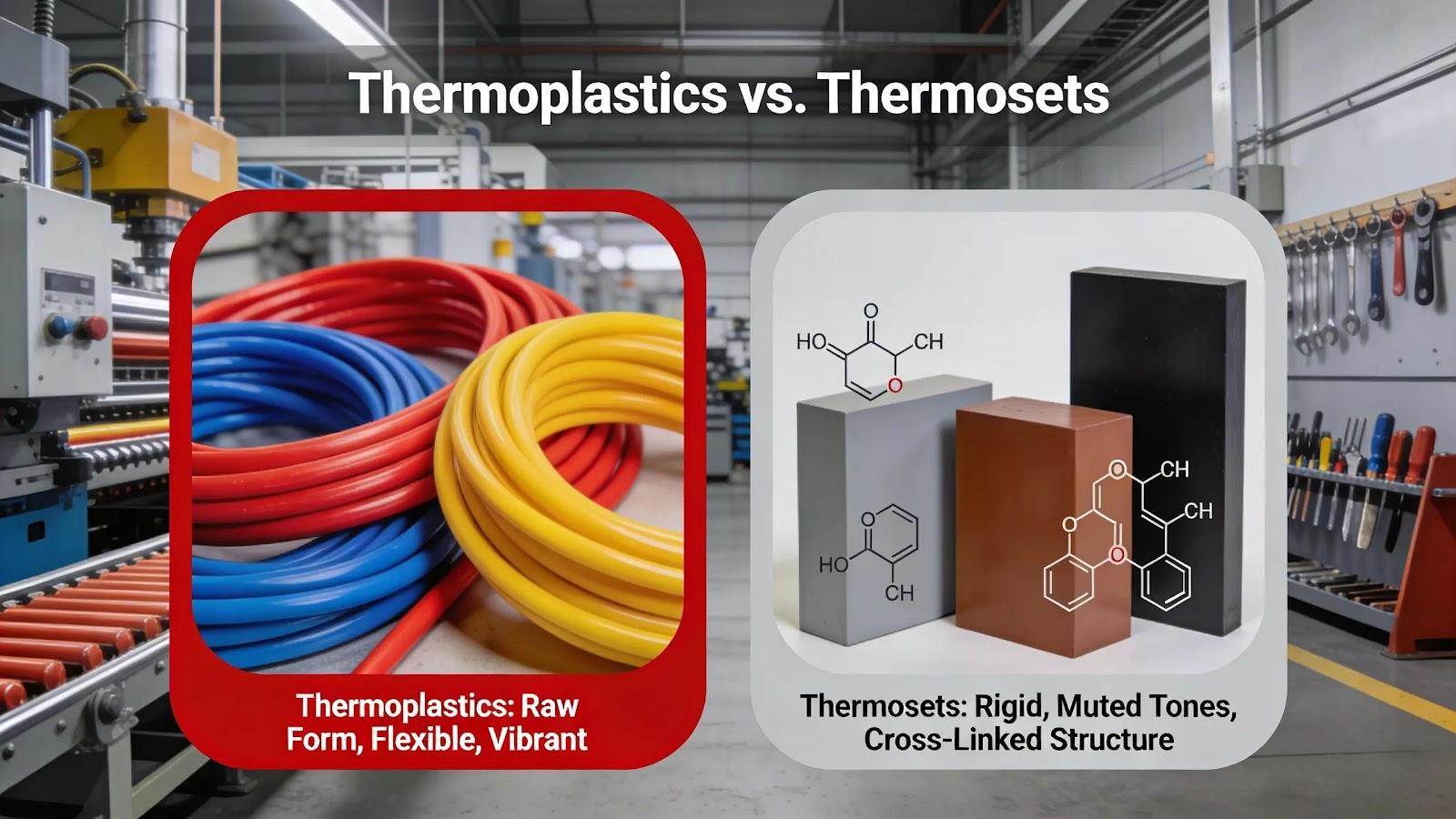
Materials for injection molding fall into three broad groups: thermoplastics, thermosets, and composites. Each group offers distinct properties and processing behaviors. Thermoplastics are melt-processable and versatile for many part designs. Thermosets cure to a rigid, cross-linked structure that resists heat and chemicals. Composites combine matrices and reinforcements—usually to boost strength, stiffness, or thermal stability while keeping weight low. Knowing these categories helps you narrow candidates based on end-use requirements.

How Do Thermoplastics Differ from Thermosets in Injection Molding?

image2.jpg


Thermoplastics—examples include polypropylene and polycarbonate—soften when heated and can be reprocessed, which makes them flexible for revisions and recycling. Thermosets—such as epoxy and phenolic resins—undergo irreversible chemical curing, producing parts with high heat and chemical resistance. The right choice depends on performance targets: if remolding or recyclability matters, thermoplastics are often preferred; if sustained high-temperature resistance or structural stability is required, thermosets can be the better option.

What Are Composite Materials and Their Applications in Injection Molding?


Composites pair a polymer matrix with reinforcements like glass or carbon fiber to deliver properties that single polymers can’t achieve alone. In injection molding, composites let you design lighter parts with higher stiffness and improved dimensional stability. Typical uses include automotive structural components, marine fittings, and industrial housings where weight, strength, and thermal behavior must be balanced. Proper design and mold considerations are essential to get consistent reinforcement distribution and optimal performance.

Which Material Properties Are Critical for Injection Molding Success?

image4.jpg


Material properties determine how a part behaves in service and how it processes in the mold. Mechanical attributes—tensile strength, impact resistance, and elongation—affect load-bearing and durability. Thermal properties—heat deflection temperature, glass transition, and thermal conductivity—govern suitability for high-temperature use and thermal cycling. Evaluate these properties alongside processing characteristics to ensure the material suits both the part’s function and your manufacturing setup.

What Mechanical Properties Affect Plastic Performance?


Tensile strength indicates how much load a material will carry before failing. Impact resistance shows how a part handles sudden forces or drops. Flexibility and elongation demonstrate how the material deforms under stress without cracking. Together, these metrics help you decide whether a material can meet mechanical demands such as stiffness, toughness, or the ability to absorb energy.

How Do Thermal Properties Influence Material Selection?


Thermal properties define the temperatures a material can withstand and how it behaves under heat. Heat deflection and glass transition temperatures indicate the limits for continuous use. Materials like nylon and PPS perform well at elevated temperatures; polyethylenes and polypropylenes are better for lower-temperature applications. Matching thermal behavior to the operating environment—and considering cooling rates and mold temperatures—prevents deformation and ensures dimensional stability.

How to Select Injection Molding Materials Based on Application Needs?


Selecting materials begins with the application brief: required mechanical and thermal performance, regulatory or biocompatibility constraints, expected lifetime, and cost targets. Industry standards often dictate allowable materials and testing. From there, compare candidates on performance, manufacturability, and total cost of ownership, including recyclability and end-of-life options.

What Criteria Guide Material Choice for Different Industries?


Industry needs to shape material priorities. Automotive parts demand low weight, high impact resistance, and thermal stability. Medical devices prioritize biocompatibility, sterilization resistance, and traceable material certifications. Consumer products lean toward cost, aesthetics, and durability. Use industry standards, regulatory requirements, and the part’s service conditions to rank candidate materials during selection.

How Do Cost and Environmental Factors Impact Material Decisions?


Cost is evaluated not only as resin price but also as processing cost, scrap rate, and part lifecycle. High-performance resins may cost more upfront but lower long-term failure or warranty expenses. Environmental considerations—recyclability, bio-based content, and carbon footprint—are increasingly important. Evaluating total lifecycle impacts and collaborating with suppliers on recycled or certified materials helps align product performance with sustainability goals.

What Manufacturing Considerations Affect Injection Molding Material Selection?


Your molding equipment, cycle-time targets, and part geometry influence which materials will process reliably. Processing windows for temperature, pressure, and cooling rate vary by material; mismatch can cause defects or inefficiency. Early-stage trials and simulation reduce risk when moving from material selection to production.

How Do Processing Parameters Influence Material Compatibility?


Processing parameters—barrel and mold temperatures, injection speed, and holding pressure—must match a material’s recommended range. Some polymers require narrow windows to avoid degradation; others tolerate broader conditions. Thermosets typically need controlled cure cycles. Understanding and validating these parameters helps ensure consistent fill, packing, and final part properties.

What Defect Causes Are Related to Material Properties?


Material-driven defects include warpage from uneven shrinkage, sink marks from insufficient packing, and short shots when viscosity or processing prevents full mold fill. Moisture-sensitive resins can cause surface blemishes or bubbles if not dried properly. Matching material selection with mold design, gate strategy, and process controls mitigates these common issues.

How Does Alpha-Mold Company Support Injection Molding Material Selection?


Alpha-Mold Company Limited specializes in precision injection molding and custom manufacturing. We help clients identify, test, and implement materials that meet product specifications—balancing performance, cost, and manufacturability to deliver parts that perform in the field.

What Custom Material Consultation Services Does Alpha-Mold Provide?


We offer tailored material consultations that assess functional requirements, regulatory constraints, and production goals. Our service includes material screening, performance benchmarking, and practical recommendations that align with industry standards. Where necessary, we run trials and material validation to confirm suitability before full production.

What Case Studies Demonstrate Successful Material Selection Projects?


Our project work shows how the right material choices improve product outcomes. For example, for a medical device client we specified biocompatible resins and validated sterilization tolerance—resulting in parts that met regs and extended service life. These cases illustrate how targeted material selection reduces risk and improves product reliability.

How Do I Choose the Right Material for My Injection Molding Project?


Start with the application requirements: mechanical loads, environmental exposure, regulatory needs, and cost targets. Narrow candidates by matching those needs to material datasheets, then validate with prototype runs and testing. If you need support, consult materials experts who can translate performance targets into practical material and process recommendations.

What Are the Advantages and Disadvantages of Thermoplastics versus Thermosets?


Thermoplastics are reprocessable, easier to recycle, and often simpler to mold—making them adaptable and cost-effective. Their trade-offs can include lower high-temperature stability compared with thermosets. Thermosets deliver superior heat and chemical resistance and dimensional stability but cannot be remelted, and they typically require different molding equipment and cure cycles. Choose based on whether remoldability or high-temperature durability is the priority.

Frequently Asked Questions

What Factors Influence the Cost of Injection Molding Materials?


Material cost is driven by resin type, grade, and availability. Additives, certifications (e.g., medical or flame-retardant grades), and supply-chain factors also affect price. Account for processing costs, yield, and part lifecycle when evaluating material economics—not just the raw material price per kilogram.

How Can I Assess the Environmental Impact of My Chosen Materials?


Evaluate the material’s life cycle: feedstock source, manufacturing energy, recyclability, and end-of-life options. Look for third-party certifications and supplier transparency on recycled content and carbon footprint. Partnering with suppliers who provide environmental data makes it easier to select lower-impact materials.

What are the Latest Innovations in Injection Molding Materials?


Recent advances include bio-based polymers, higher-performance composites with better strength-to-weight ratios, and functional materials with embedded sensing or conductive properties. Suppliers are also improving recycled-content grades that retain mechanical performance. These developments expand design options while addressing sustainability and performance needs.

How Does Material Processing Temperature Affect Finished Products?


Processing temperature affects flow, crystallinity, and degradation. Too high a temperature can burn or degrade a polymer; too low can cause incomplete fill or poor surface finish. Each resin has an optimal processing window—staying within it is key to consistent dimensions, mechanical properties, and aesthetics.

What is the Role of Additives in Injection Molding Materials?


Additives modify base resin properties: stabilizers prevent degradation, fillers and reinforcements improve stiffness and dimensional control, and additives provide UV resistance, flame retardancy, or color. Selecting the right additive package tailors material behavior to the part’s functional and regulatory needs.

How Can I Prevent Common Defects in Injection Molding?


Prevent defects by selecting a material compatible with the part design and processing equipment, controlling processing parameters, and optimizing mold design. Proper drying, correct gate placement, balanced filling, and consistent cooling reduce issues like warpage, sink marks, and short shots. Use simulation and prototype validation to catch problems early.

Conclusion


Material selection is a foundational decision that affects product performance, manufacturability, and cost. By matching material properties to application needs, validating processing parameters, and leaning on experienced partners where needed, you can deliver parts that meet functional and business objectives. For hands-on guidance, Alpha-Mold’s team can help evaluate materials, run trials, and validate solutions for your injection molding projects.